KH
KIMBERLY HOLLOWAY SOFTWARE SOLUTIONS
Back to Featured Work
Business Process Automation

Workflow Evidence Assistant

Turning a multi-step manual operational process into one guided software application.

Python Desktop Application Document Processing Data Validation Workflow Automation Evidence Management
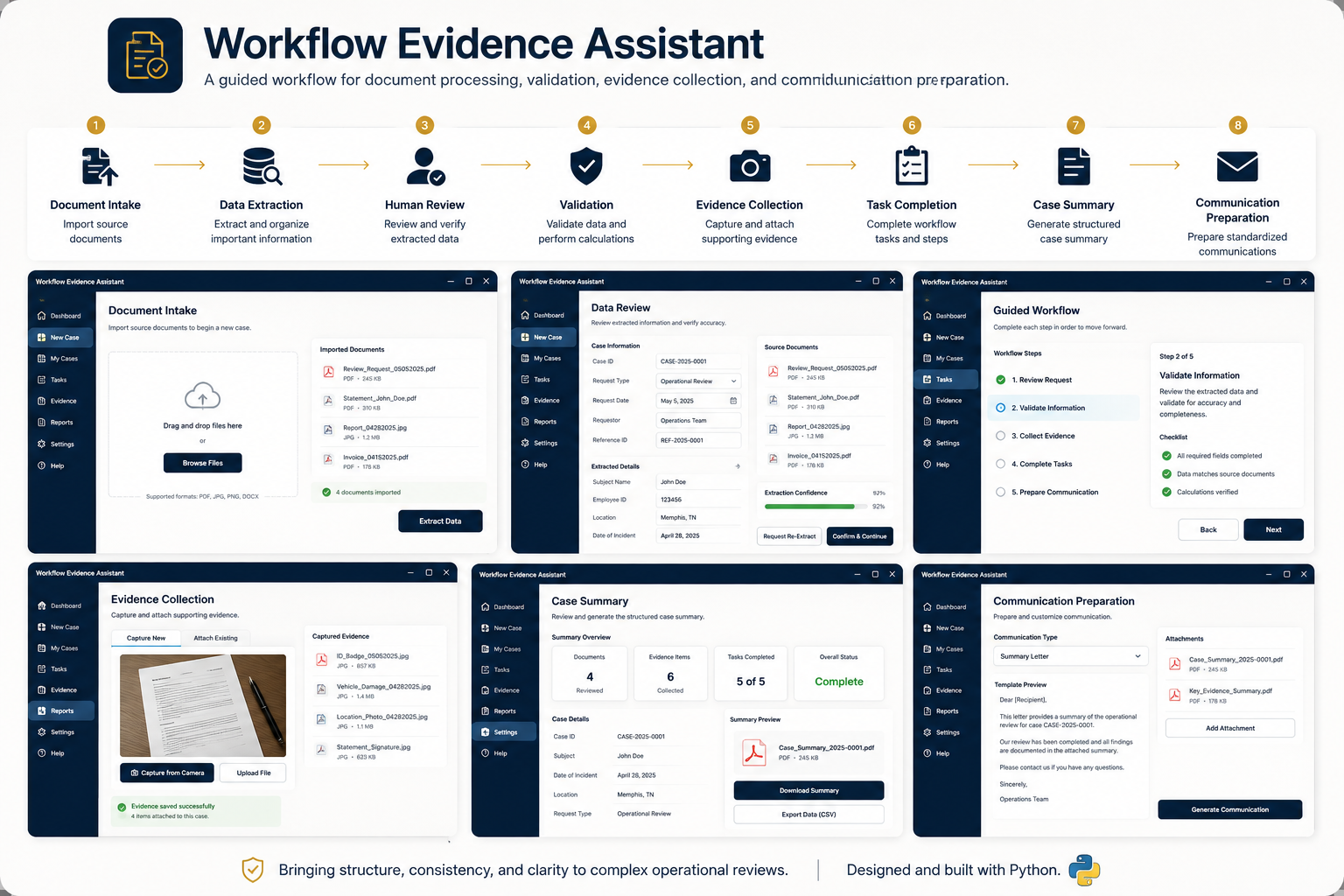
Workflow Evidence Assistant application case study showing document intake, data review, workflow processing, evidence collection, and case summary screens

Portfolio representation created with fictional sample information to demonstrate the application's workflow while protecting confidential business information.

Too many manual steps were living in one process.

An operational review process required users to move through several manual activities. Source documents had to be reviewed, important information identified, data verified, calculations performed, supporting evidence collected, and communications prepared.

Because those activities were spread across multiple steps and tools, the process required significant manual effort and created opportunities for missed information, inconsistent processing, and unnecessary repetition.

Build the software around the process.

I designed and developed the Workflow Evidence Assistant, a Python desktop application that brings the major activities of the review process into one guided workflow.

Instead of automating only one isolated task, the application supports the process from document intake through final communication preparation while keeping the user involved wherever human review or judgment is required.

One workflow from intake to final output.

The application organizes the work into a structured sequence so the processor knows what has been completed, what requires attention, and what comes next.

01 Document Intake
02 Data Extraction
03 Human Review
04 Validation
05 Evidence Collection
06 Task Completion
07 Case Summary
08 Communication Preparation
Imports source documents and extracts relevant information.
Presents extracted information for human verification before processing continues.
Guides users through required processing steps and tracks completion.
Performs validation and workflow calculations where appropriate.
Captures and organizes supporting evidence within the workflow.
Connects supporting evidence to the related workflow tasks.
Builds a structured case summary from reviewed information and completed work.
Assists with consistent communication preparation at the end of the process.
Provides contextual guidance so users can understand what to do and why the step is important.
Keeps the entire process inside one structured and repeatable workflow.

Less repetition. More structure.

The application transforms a fragmented manual process into a structured workflow. It reduces repetitive work, improves consistency, makes required steps easier to follow, and keeps information and supporting evidence organized throughout the process.

One Guided Process Multiple activities are brought together instead of being handled as disconnected tasks.
Less Manual Work Repetitive processing steps can be automated or assisted by the application.
Greater Consistency Required steps and information are presented in a structured, repeatable workflow.
Better Organization Case information, evidence, tasks, and outputs stay connected throughout the process.
The Bigger Idea

I don't start with the software. I start with the problem.

This project demonstrates my approach to software development: understand the business process first, identify where unnecessary manual work occurs, and then build technology around the way people actually need to work.

Have a similar challenge?

Your manual process may be a software opportunity.

If your team is spending too much time moving between documents, spreadsheets, emails, systems, or repetitive steps, let's talk about what could be simplified.

Discuss a Similar Project